2014年10月28日 星期二

The eighth class-Finnish design in media


Today's topic switch design to media field.

We, as designers, usually think about how to improve the society by design, no matter which field we are in. Industrial designers try to improve the life of daily life, whereas, user experience designer try to improve the life of interaction and service. Graphic designer can improve life by drawing picture or publish books to make people touch or change their view, but what will media designers do?

Nowadays, media includes press media, news, radio and TV programs. All of them bring experience and information to people. In order to be closer to people, more correctly is user, we should know more about design in media. Moreover, the information resource is change in past 30 decays that people's ideologies is also changing. However, because of the variation of media. It becomes more difficult to understand each other between designer and others. Sometimes, a design can catch designers' attention whereas it cannot inspire people, so we should know more of what common people think and how they think.

Usually, it is said that engineers care more about numbers and logic and artists and designers think more about feelings and aesthetics, in fact, designers also need logic thinking and care about those problems which engineer care. It is important to show to people that designers' design thinking is full of logic and is a methodology of problem solving, just like what IDEO do.

The seventh class-Shifting foci of industrial design

Today's topic is about the shifting foci of industrial design in Finland.

For me, it still like another history class of design, but I can find out the change of design through these events of design in Finland. Design department in Aalto University is a good example. It was created as a handcraft school in end of 19 century, and then switched to technical design in 1960-70s and focused on industrial design in 1980s. When user interface and service design were just raised in 2000, it changed the target to industrial and strategic design, and then in collaborative and industrial design in 2010. It all base on the need of society.

Besides, Aalto University is also good example of combination of multiple field, such as business, design, art and technology, such as IDBM which is combination of business and design field. It is really outstanding in innovation and cross-field cooperation.

I think design in Finland always on the side of society need is very great and is a main way to maintain the advantage of design. Besides, design in Finland has been applied in more various fields in the society that can improve efficiency of problem solving.

The sixth class-Design in Finnish innovation policy

Today's speech is about the innovation policy in Finland, but I didn't go to class because the appointment of applying resident permit. 

I try to understand the content of this speech with only slides of the speech.

After reading the slides, I think the Finnish Innovation Policy is so great that Taiwan, my home country, should learn more from Finland. Although design in Taiwan is noticed and the government try to put efforts in design policy, it still fall behind from Finnish design policy in which design plays an important role of innovation. It's a good chance for me to understand how Finnish government make policy of design innovation.

Besides, I also visit the website called Teke. It is a really good platform for design and innovation.

2014年10月24日 星期五

The fifth class-Post war design heritage today


One of Alvar Aalto's most famous design, Savoy vases.

Today's topic is more about history of Finnish design. As we known, Finland underwent several war during 19 and 20 century and it caused shortage of material, daily stuffs, and house. Because of the situation, designers in the era had to think more about product design and figure the most important of people need. It also made designers have to think more about material applying.And we can find out the style of Finnish design of early and middle of 20 century is so simple but elegant and always emphasizes the characteristic of materials. Nowadays, young designers inherit and elongate the style and element of design.

I think Savoy vase is one good example. It also can be called as Aalto vase, is one of iconic glassware in Finnish design. It was originally designed for the Karhula-Iittala glass factory in 1936. It amazed people in the 1937 World's Fair in Paris with its irregular shape which can show the fluid characteristic of glass. It became famous and iconic symbol of Finnish design. In recent decays, it is the most famous glass ware of Iittala.
Trivet large, birch
In 1998, Finnish designer, Jani Martikainen made a product called Majamoo Pot Stand. It inherits the element of Aalto Vase and merges the style of simple but elegant, besides, it presents the bend technique of woody stuffs. It shows that the elongation of Finnish design.

In my opinion, I think Finnish design has its own style that everyone can easily recognize the products made in Finland, but it also limit the development of Finnish design that some innovated design can not be accepted easily in this area or even in the world. But there is no standard answers to this issue. Anyway, the advantages are more than disadvantages in design style heritage.


2014年10月23日 星期四

The fourth class-Design innovation in industry


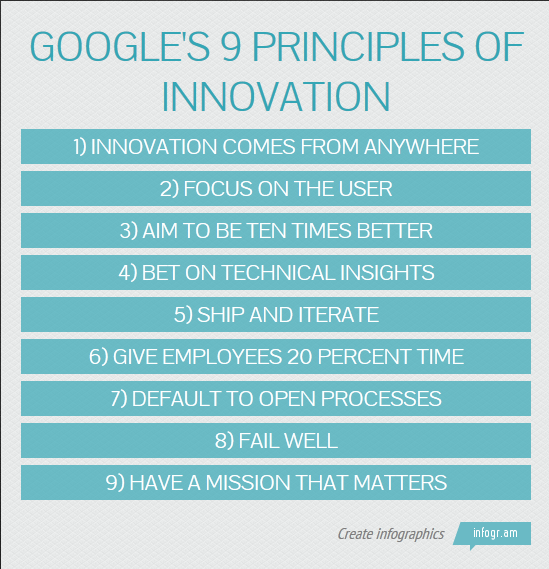
Today's topic is about Design innovation in industry. In the beginning of diary, I want to mention the well known principle made by Google. All these nine principles can be use in anywhere about innovation and user interaction business. Also, it can be applied in product and service design. As we known, Google hire people in various field, such as engineering, design and business, and integrate them well to become an outstanding group with these principles to promote employee innovating.

In design field, we always listen the word, innovation, but it is easily misunderstood. Innovation is not try something randomly and get a good result different from past, but it is a systemic hard work of pursuing change and improvement. It also a word to ask designer should not stop trying new methods just like inventors do,


Besides, in design field, everyone is familiar with those design aware. In 21 century, we have at least 13 international design contests, but these contests should be the motivation of design and innovation. I think I can use a video of speech on TED to explain the reason:

In the speech, the speaker mentioned a question “Who is going to need designer?” We have to think more about the issue especially we are in the age of maker movement. People can easily get information and make stuff by their own. Designers' important is change from before and we as a designer should think how we can do in the change.

I like the speech this week, it bring a lot of impact and deep thinking question we should consider and find a most suitable way to go even the environment is also change faster than before,

2014年10月22日 星期三

The third class-Emerging maker culture

Emerging Maker Culture
Today's topic is about maker culture in Finland and the makers' movement in the world. The speakers showed many interesting examples of 3D printing and online open source design.

After 3D printer developing, it make product design faster and easier that designer can easily make models with it. Besides, it also change the process of product design and the limit of manufacture that products can have more complicate structure. Moreover, because of the lower price compared with those manufacturing machines, making a design is no more belong to product designers. It bring a huge change of product manufacture just like the book, Makers, said that it is a new industrial revolution. Also, because of 3D printer, product design can add more elements of customization. People can choose a prefer shape of product such as glasses or smart phone's protector. It make product design has more variation and closer to users.

In the first part of speech, Professor Kahtala introduced the recent situation of maker culture in Finland, besides, she also talked about the trend and future project about makers. I'm really surprised that it is much more active compared with the situation in Taiwan where I come. In the speech, I found that the environment in Finland is  encouraging innovation, no matter is government or business.

In the age of maker movement, we always think about creating new products and things, moreover, there are some website teaching people about the business model of maker's production. However, we also have think that do we need more stuff? It is the question mentioned by the third speaker. It impacted the vision I imaged about maker movement. It remind us that we as designer should think more about design products and not just making stuffs blindly.


the 3D printer gun.
Besides, he also mentioned about the disadvantages of 3D printer. (http://www.techrepublic.com/article/the-dark-side-of-3d-printing-10-things-to-watch/) It also bring me another aspect of 3D printers. We should not think it as an omnipotent device of manufacture. In addition, the 3D printer also bring other issue of moral and law. For example, it is much easier to create a gun with 3D printer, although the strength of this homemade gun can not compared with the real one, it still has some kind of damage to people no matter is to user or to target. It can not be restrained by only human's conscience. It's a really troublesome problem we need to solve.


A Chindogu which helps you draw lipstick on your lip easily.
In the speech, the speaker also mentioned a noun called "Chindogu (珍道具)". It is describe those useless products and comes from Japanese culture. Maybe lots of people feel weird, but I think it is a humorous culture of product design. Just like the critical design wants to criticize, chindogu brings a humorous and ironic atmosphere to product design.


2014年10月19日 星期日

The second class- Ilmari Tapiovaara's exhibition in Design museum


When people talk about Finnish designer, we usually think of Alvar Aalto who is not only one of greatest architect but also a products designer. However, there is another Finnish designer, Ilmari Tapiovaara, we should know. Before I went to design museum, I have never known about this designer who is also one of the greatest designer in Finland. 

Fortunately, because of the Design week in Finland, I went to design museum for free on Sunday before I enrolled in Design and Culture course. I saw a lot of furniture designed by Ilmari Tapiovaara, including the famous chair, Domus Chair, which was made with plywood technique and can be easily piled.

Domus chair, 1946

Ilmari Tapiovaara showed the piling method of Domus Chair with models.
(searched from google)


In the exhibition, I also like another chair designed by Ilmari Tapiovaara, which is called Wilhelmina Arm Chair. It also can be piled and the shape of the wood skeleton looks not only flexible but also elegant.

Besides those products, there were lots of master's sketch in the exhibition. It shows the process of product development and how amazing the master's sketch was. In the age without computer, they can draw like what we do with computer today. Moreover, his sketch showed lots of detail including the function and mechanism with only pencils. It reminds me that how important the basic skills, such as sketch and mechanism, is.


The sketch by Ilmari Tapiovaara.


Except furniture design, Ilmari Tapiovaara is also famous in interior design which is his major field of design. In his work of interior design work, we can find the style is also simple and elegant just like his furniture design. No wonder it is said that Ilmari Tapiovaara is versatile designer in Finland.


2014年10月17日 星期五

The first class- all about critical design

Today is the first day of Design and Culture course. After Professor Turkka's introduction, Researcher J-P Kola gave a speech of critical design.

Critical Design is not only producing design products which is aim to improve people's live or making more convenient in daily life but uses speculative design proposals to challenge narrow assumptions, preconceptions and givens about the role products play in everyday life. It is more of an attitude than anything else, a position rather than a method. There are many people doing this who have never heard of the term critical design and who have their own way of describing what they do.

In the course J-P introduced some examples I was interested in. The first one is Huggable Atomic Mushrooms which is made by Dunne & Raby / Michael Anastassiades. When we talk about nuclear bomb, no one can forget what happened in Hiroshima and Nagasaki in Japan. It was so horrible that people know the nuclear weapon should not be used again. The designers transferred this horrible event to cute and amiable fabric chairs to approach children and let them understand about atomic bombs and think deeper about meaning of war and human being. I like this critical design product because it has both function and meaning and people can think more and deeper about the topic.


Besides, J-P also introduced Noam Toran's artifacts called "Accessories for Lonely Man"

There are 8 products called "Sheet Thief/ Cold Feet/ Heavy Breather/ Hair Alarm Clock/ Chest Hair Curler/ Shared Cigarette/ Plate Thrower/ Silhouette Light" in this series. All of them remind people that people usually ignore their important companionship and present how lonely the modern people are. It also said that people can alleviate the loneliness in their life with these products. However, I think these products are a little annoyed and will make people feel more lonely when they have them in daily life. Just imagining, when you sleep alone, the sheet thief scrambles and you for sheet. No matter you win or lose in the end, you are still single and alone. The situation of people can not really improve by the sheet thief. In my opinion, with the wifi technology improvement, I think this product can connect with another one by wifi. When you grab your sheet, it will send signal to another machine and grab someone's sheet. With this modification, you can scramble for sheet with a real person you may or may not know and alleviate your loneliness.

Compared with critical designs which usually functional-less but makes people think more, I prefer it can have some actual function even it may not be very useful. Such as this wine glass made by Sebastian Popa who is also an industrial designer.

This product can make people think about not only drunk driving issue but also alcoholic issue which are serious in lots of countries. If people drink wine with these glass, they will be reminded not to drink too much and drive vehicle. Besides, I think the glass has a spring in neck also makes itself funny and humorous. 

After J-P's course and reading some materials searched on internet, I understand that critical design wants to transmit a thought about critical issues that people should know and think about more than make products with useful functions, but I still think the critical design products without function are more like art crafts.